


I Visited an Unprecedented Ikebana Exhibition at the Osaka Expo 2025
Updated: Nov 18, 2025

What Made This Osaka Expo 2025 Ikebana Exhibition Unprecedented
On October 7, 2025, I traveled from Tokyo to Osaka to visit a remarkable event —
the “Japan Ikebana Art Special Exhibition” held inside the Osaka–Kansai Expo 2025 site.
This large-scale exhibition brought together 64 schools of Ikebana and 86 leading masters,
showcasing works from headmasters and top artists of each school —
a truly unprecedented gathering in the history of Japanese flower art.
For anyone studying or practicing Ikebana, witnessing so many styles and philosophies coexist in one place
was profoundly meaningful and inspiring.
Given the sudden announcement, limited preparation time, and difficulty of securing entry tickets near the end of the Expo,
it felt clear — “If I miss this moment, it may never happen again.”
After a fierce ticket battle, I finally arrived in Osaka.
Here, I’d like to share the atmosphere of the venue, highlights of the works,
and the insights I gained as a practicing Ikebana artist.
What You’ll Learn in This Article
About the Osaka Expo 2025
Why is this unique
layout of the venue
Notable works and floral materials
Reflections as a Ryusei School artist
The meaning of “viewing” as part of Ikebana
Summary & how it connects to Oraqua Tokyo
About the Osaka–Kansai Expo 2025
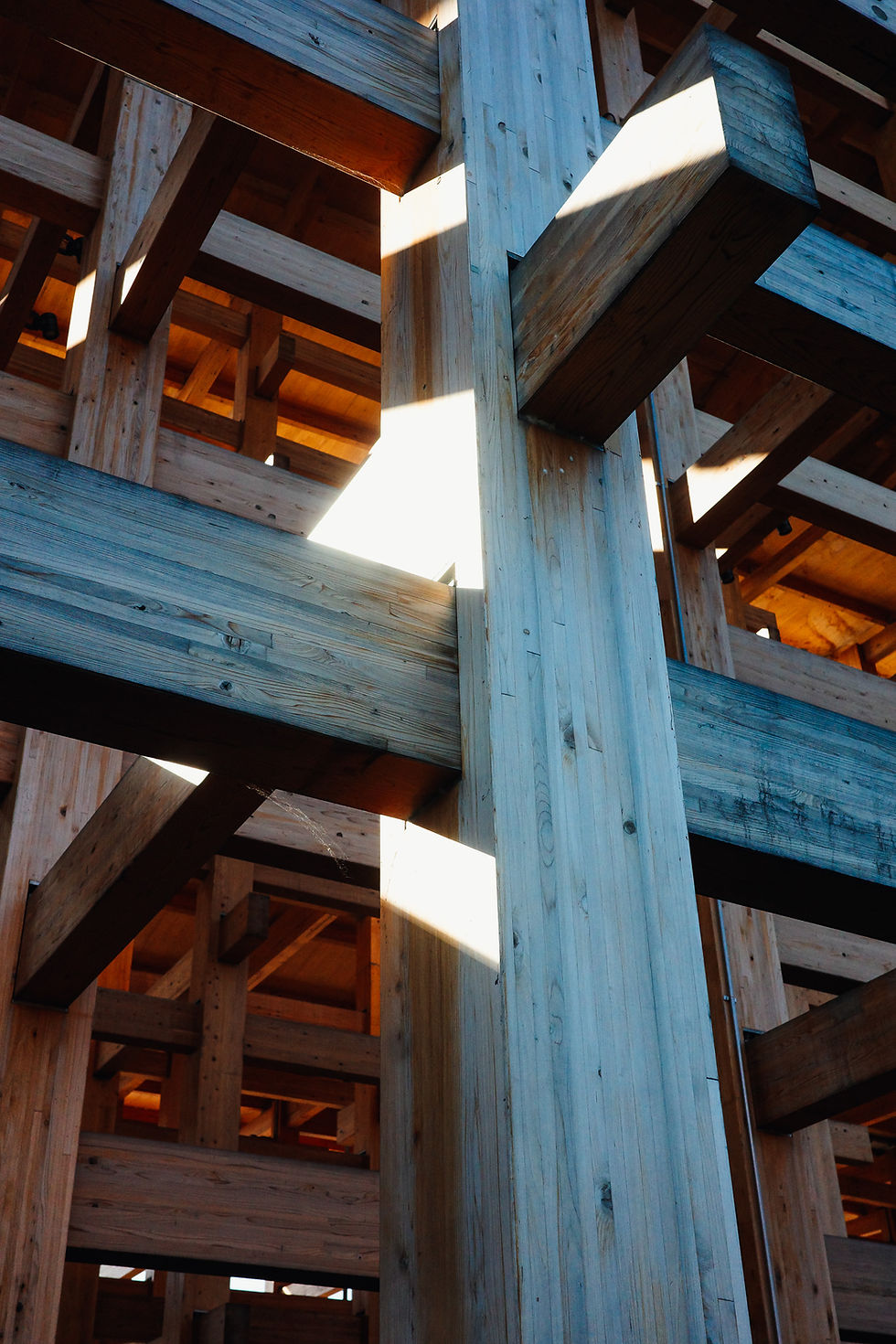
Theme: Designing Future Society for Our LivesOver 150 countries and regions participate,
presenting visions of future living, technology, environment, and culture.
The previous Osaka Expo, Expo ’70, left a legendary mark in Japanese design history —with creators such as Kenzo Tange, Taro Okamoto, Kiyoshi Awazu, Tadanori Yokoo, Isamu Noguchi, and more.
Even the avant-garde Ikebana pioneer Sofu Teshigahara, founder of the Sogetsu School, was involved in its artistic production.
Now, 55 years later, Osaka once again becomes a stage where art, design, and technology intersect.
As someone fascinated by Expo ’70, I couldn’t wait to see how flower art would appear in this futuristic setting.
Venue: Yumeshima, Osaka
Period: April 13 – October 13, 2025
Visitors: Estimated tens of millions

Upon entering the Expo site, the first impression was that of an enormous theme park —a sea-surrounded futuristic city filled with excitement and energy.
The architecture and pathways were designed with sustainability and fluid movement in mind.In that space of innovation,
Ikebana stood quietly yet powerfully,not as “traditional culture,” but as a culture of the future —a living art reinterpreting harmony between humans and nature.

Ikebana Standing in the “Future”
The exhibition, designed in vivid colors inspired by the official Expo mascot Myaku-Myaku,was located slightly apart from the busy pavilions.

Despite being a free exhibition, the queue was long, and the hall was full of curious visitors.
The crowd moved slowly, almost reverently, through the space —
as if walking through a forest of ideas.

Many were not Ikebana practitioners; rather, tourists and first-time viewers discovering the art for the first time.
Seeing people from around the world quietly observing the works reminded me that Ikebana transcends language.

Highlights and Impressions
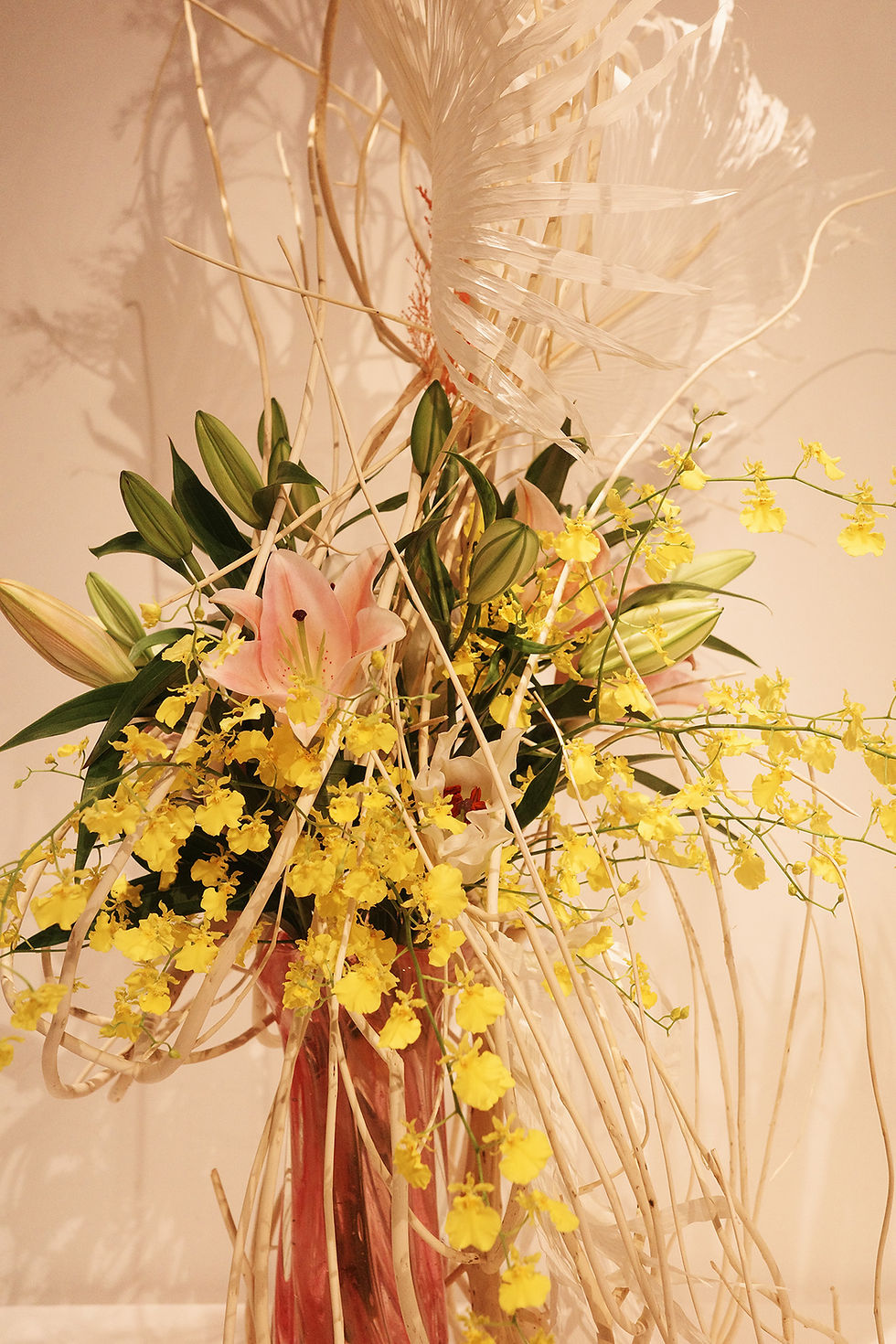
Most of the works were medium to large in scale,each displayed in a minimalist white space of about 50–75 cm square.Every piece reflected the mastery and presence of its creator —from stately traditional compositions to free, contemporary arrangements using rare materials.

Even the containers — from ceramic and metal to glass and experimental media —expressed the fusion of tradition and modernity.

Common Plant Materials Used
Although the exhibition took place in early October,many works vividly captured the essence of autumn in Japan.
Category | Main Materials |
Fruits / Seed Branches | Persimmon, Bittersweet vine, Nandina, Foxface, Pyracantha, Dogwood berries, Rose hips |
Branches / Woody Plants | Hinoki cypress, Pine, Red-twig dogwood, Plum branches, Rowan, Birch bark, Driftwood, Roots |
Flowers | Anthurium, Gloriosa, Pincushion protea, Cymbidium orchid, Bird of Paradise, Lisianthus, Carnation, Gentian |
Leaves / Foliage | Dracaena, Banana leaf, Calathea, Areca palm, New Zealand flax, Dried agave or cycad leaves |
Willows / Vines | Corkscrew willow, Kiwi vine, Wisteria vine, Bleached branches, Pampas grass, Mitsumata |
Dry / Structural Materials | Dried banana leaves, Driftwood, Bamboo, Bark fibers, Processed natural forms |
Together, these materials embodied the intersection of nature, culture, and time,
bridging the aesthetic of the past with the creativity of the future.

Reflections as a Ryusei School Artist
As a Ryusei School practitioner, I deeply resonated with the exhibition’s theme:“Connecting the Future of Ikebana Culture.”
Ikebana has survived because generations of masters have continued to pass it on —from teacher to student, hand to hand, heart to heart.Through those quiet acts of creation and transmission, the culture has never lost its flame.
Viewing as Part of Ikebana
Observing is as essential as creating.
By asking ourselves:
What moved me in this work?
Why did I feel drawn to this composition?
we refine our sensitivity — and the next time we face the plant, our perception deepens.
The Osaka Expo brought together the highest masters of Ikebana,
and for me, it became both a study and a reaffirmation of why this art continues to matter.
About Oraqua (Tokyo Nihonbashi Ikebana Studio)

At Oraqua, our Ikebana studio in Tokyo’s Nihonbashi district,
we teach the Ryusei School curriculum, emphasizing both classical form and contemporary freedom.
Our studio — renovated by an architectural design firm —
serves as a shared gallery and creative space where anyone can experience Ikebana
not as formality, but as a living art in everyday life.
We welcome both beginners and international guests for hands-on lessons
to experience the timeless beauty of Japanese flower art.

Conclusion
The Ikebana exhibition at the Osaka–Kansai Expo 2025
was a powerful intersection of tradition, modernity, and the future.
Seeing 64 schools and 86 masters display their creations side by side
revealed the diversity and strength of Japan’s aesthetic spirit.
The act of “Ikebana — giving life through form” continues to evolve,
proving that this is not a relic of the past but a living, breathing art form.
Through our lessons at Oraqua Tokyo,
we aim to carry this living culture forward,
sharing the essence of Japanese beauty with people from around the world.


Comments