


Ikebana Exhibition Report – 1st Edogawa Tokyo Cultural & Arts Festival
Report: Ikebana Exhibition at the 1st Edogawa Cultural & Arts Festival

On-site Report from the Ikebana Exhibition
Ikebana exhibitions held throughout Tokyo and across Japan are places where practitioners from various schools present the results of their daily discipline and artistic exploration.
Ikebana is not simply about “looking” at flowers.It is about receiving—through the whole body—the quiet strength of the materials, the atmosphere of the space, and the seasonal presence held within each work.
As a Ryusei-ha artist myself, I regularly create and exhibit works while also visiting as many exhibitions as possible, both in Tokyo and in other regions.
In this report, I share what I learned and sensed at the venue—especially for:
people who want to try Ikebana,
beginners searching for a welcoming place to learn.
This time, I happened to encounter the Ikebana Exhibition at the 1st Edogawa Cultural & Arts Festival, and decided to step inside.
Finding Ikebana in Everyday Life
Living in Tokyo, you sometimes encounter Ikebana in unexpected places:
restaurants, traditional eateries, hotel lobbies, shop windows.
Even a single arrangement can shift the atmosphere of a space—adding stillness, dignity, and beauty.
When such a work appears in the form of a public exhibition, it elevates the entire place.
That was exactly what happened in Edogawa on the day of my visit.
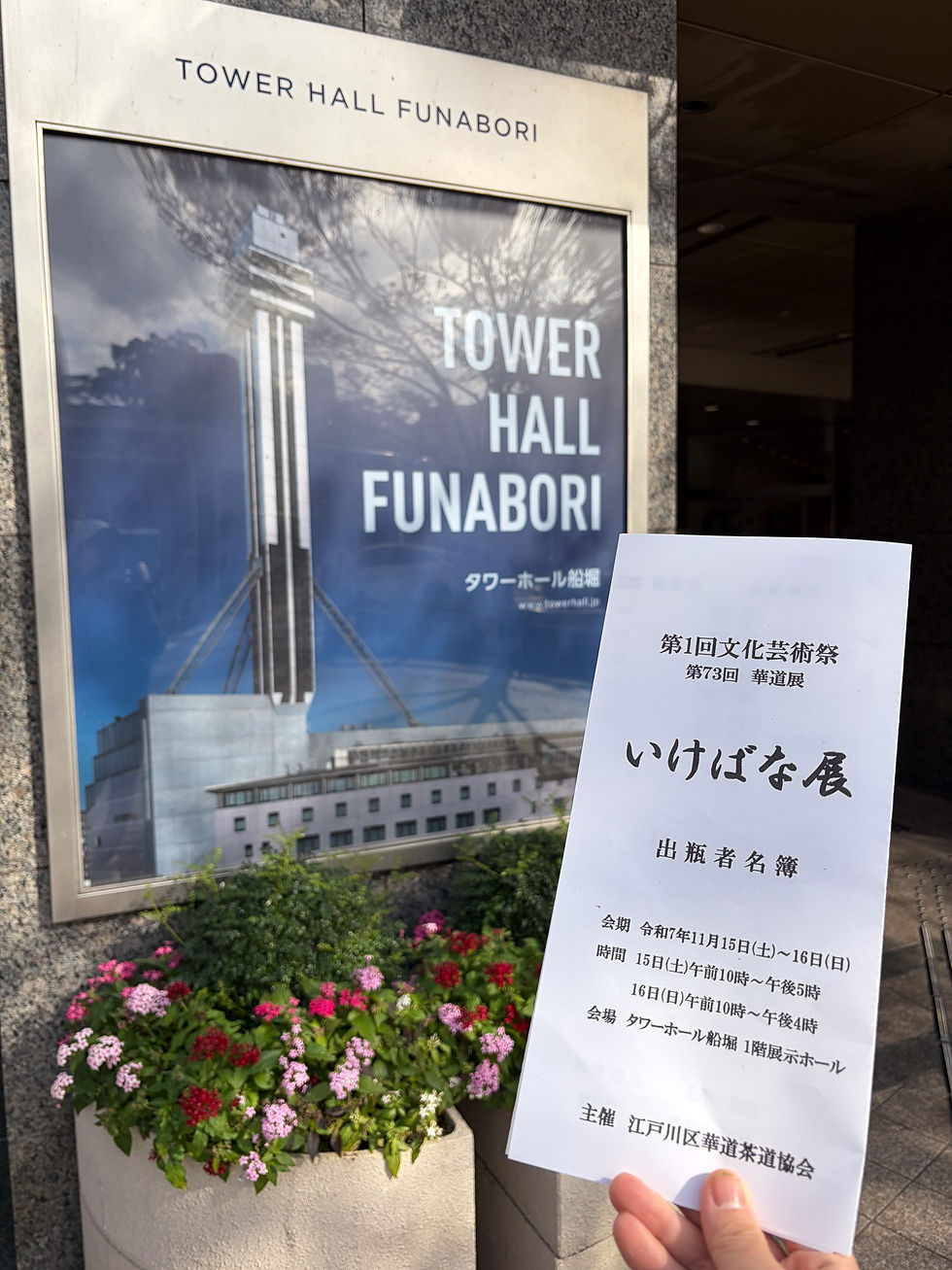
It was a slightly chilly afternoon in mid-November.I had planned to stop for coffee at Caravan Coffee in Funabori Tower (yes, this reveals my usual neighborhood…!).
Funabori Tower is a civic hall known for frequent cultural events.As I walked past the exhibition space, a sign instantly caught my eye:
“Ikebana Exhibition.”
Coffee suddenly became secondary, and before I knew it, I had stepped inside—drawn in by the unexpected encounter.
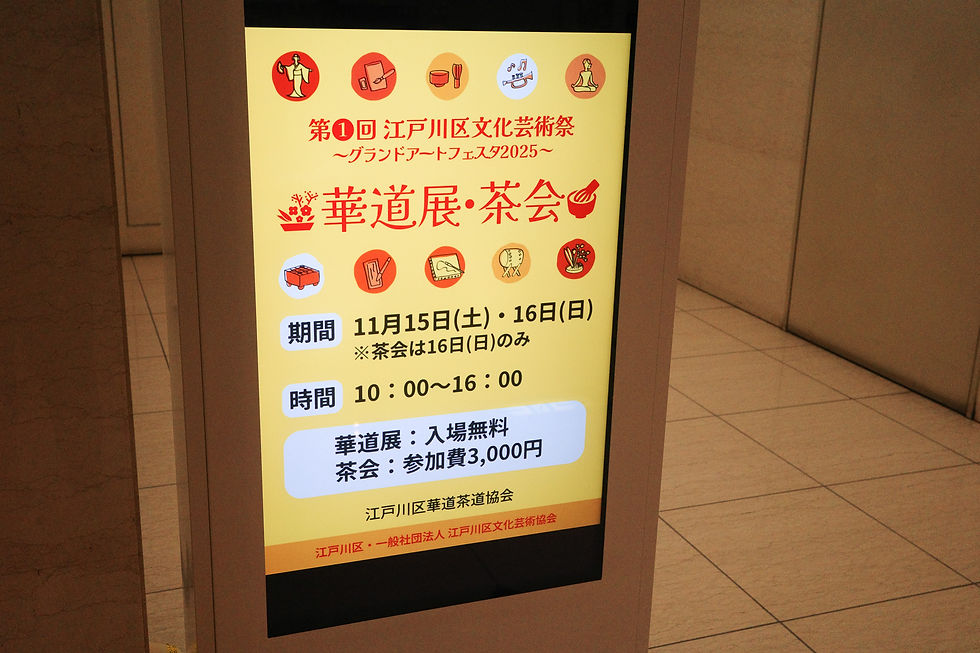
The Exhibition as Part of the 1st Edogawa Cultural & Arts Festival
This exhibition was one of the central programs of the Grand Art Festa 2025,the newly restructured Edogawa Cultural & Arts Festival.
Dates: November 15 (Sat) – 16 (Sun)
Venue: Tower Hall Funabori
Although this was called the “1st” festival, Ikebana exhibitions in Edogawa actually have a long history—continuing for 73 years under the former “Cultural Festival.”The new festival framework builds on this foundation while redesigning it for the future.
At the reception, I was warmly greeted:
“Which school are you from?”“Where do you usually arrange?”
Ikebana creates an instant shared language, even among strangers.The exchange felt natural, kind, and deeply familiar.

I also had the opportunity to meet the chairperson overseeing both the Ikebana and Tea Ceremony programs—another unexpected yet meaningful connection.
These encounters are part of what makes an Ikebana exhibition valuable.

A Spacious Venue that Enhances Each Work
The exhibition hall was impressively large, with a ceiling height of about 5 meters.
Ample space between works allowed visitors to move slowly and appreciate each piece without visual noise.
The warm, soft lighting highlighted the richness of autumn materials, bringing out both seasonal colors and fresh vitality.
The generous spacing made each work feel more powerful and more sincere.

Autumn — The Most Abundant Season for Ikebana Materials
November is the season when Ikebana materials are at their richest.
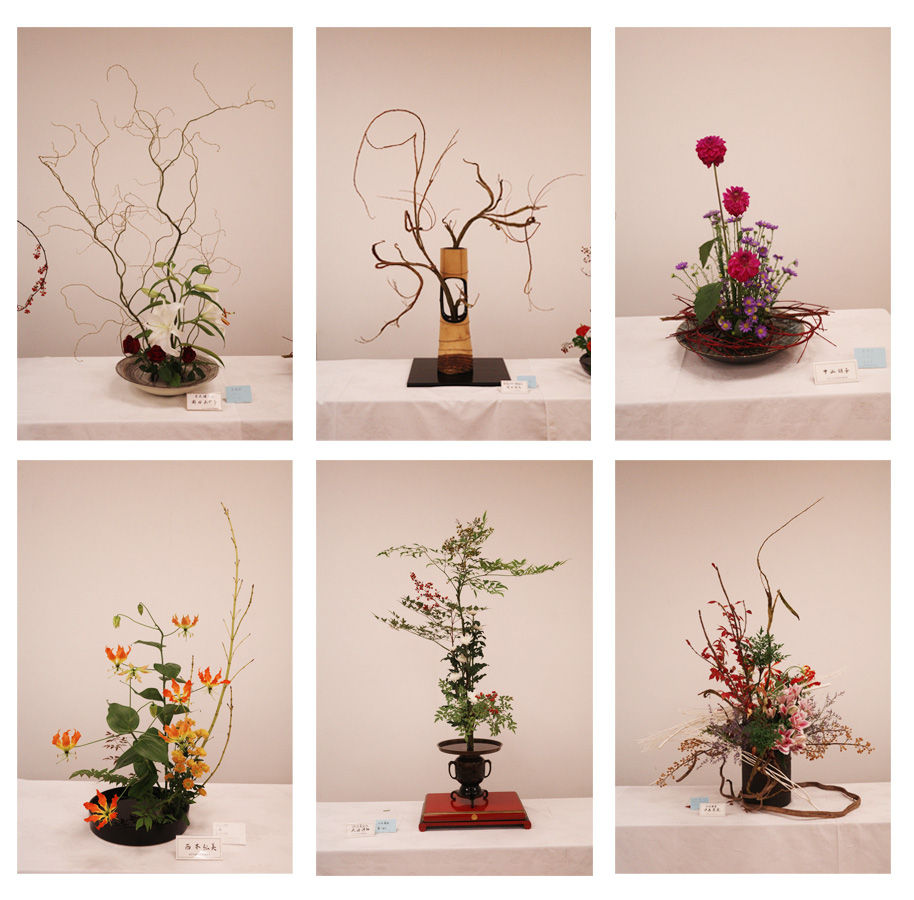
Displayed at the venue were:
red and gold autumn branches
wild roses
Benisumomo (purple-leaf cherry plum)
white birch trunks
persimmon branches
King Protea
Kangaroo Paw
Doudan azalea
Dragon willow
The combinations of branches, berries, flowers, and structural materials created works with a density that can only emerge in this season.
Autumn materials naturally hold depth and shadows.
For this reason, even “free style” arrangements created in autumn have a completely different atmosphere compared to spring or summer.
The entire venue felt filled with the quiet weight and time held by plants.

Diversity of Styles Across Schools
Multiple Ikebana schools participated in the exhibition.Classical styles (Kokka / Seika) and free-style works were displayed side by side—even beginner works were shown with equal presence.
This diversity is one of Ikebana’s greatest strengths.
Ikebana is often seen as highly traditional or formal, yet its expressive range is incredibly free.
Tea Ceremony and Ikebana in One Shared Space
Tea ceremony gatherings were held concurrently.Visitors in kimono walked slowly through the venue, enjoying both the floral works and a bowl of tea.
Tea ceremony and Ikebana share core values:concentration in the present moment, beauty of gesture, awareness of space.
Experiencing them together strengthened the stillness and refinement of the atmosphere.
Edogawa continues to nurture not only Ikebana but many cultural activities—an aspect that was clearly visible in this event.
Ikebana as a Living Part of Everyday Culture
This exhibition reaffirmed for me that Ikebana is not merely an art form—it is a cultural practice that enriches everyday life.
Anyone, including total beginners, can enjoy and participate in this culture.Local exhibitions, community events, and festivals like this one all serve as accessible gateways into Japanese aesthetics.
They are spaces where daily life and culture blend naturally.
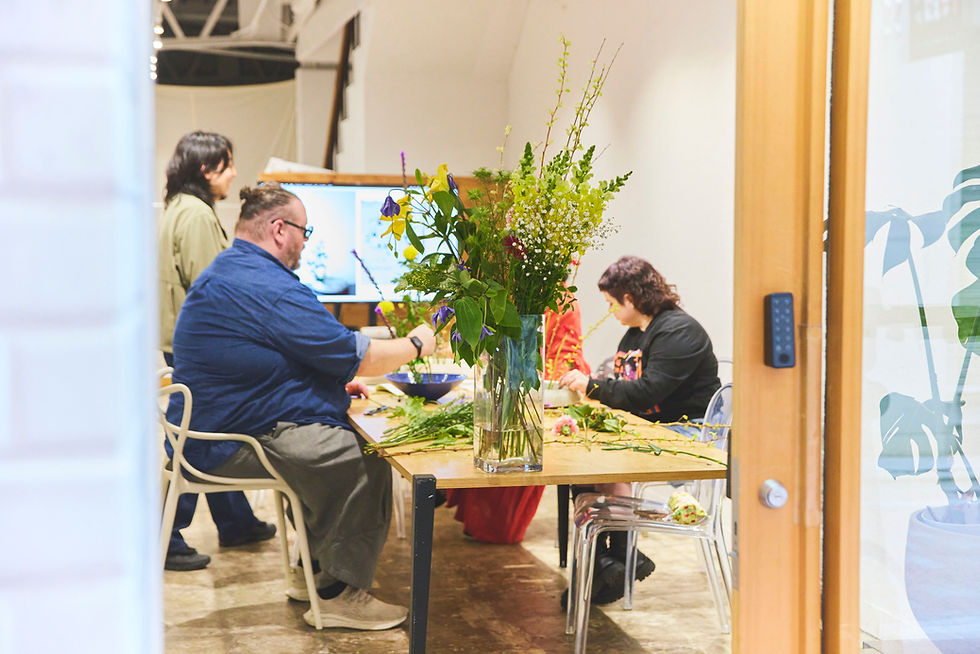
Ikebana Lessons at Oraqua – Tokyo Nihonbashi
I teach Ikebana at Oraqua, an Ikebana studio located about 20 minutes from Edogawa, in Tokyo Nihonbashi.
We offer a full curriculum from Ryusei-ha, a school with over 140 years of history—perfect for true beginners who want to start from the basics.
We also provide English-friendly lessons for international guests.
Inspired by events like this exhibition, Oraqua aims to be a place where anyone can casually pick up plant materials and experience arranging them.
A space where
“seasonal plants settle your mind and create an Oraqua moment.”
We welcome you to join us.
🔗 Book a lesson here:


Comments